Is there a hospital on Koh Phi Phi? Medical help, clinics & emergency numbers
Yes: there is a small government hospital on Phi Phi Island, in Tonsai Village, plus private clinics and pharmacies. It is set up to stabilise emergencies, so serious cases are transferred by boat to hospitals on the mainland. Here is where to go, who to call and what to expect.
In short
Medical help on Koh Phi Phi at a glance
- Emergency? Call 1669 for an ambulance or medical emergency, or 1155 (Tourist Police, English-speaking, 24 hours) if you need help with language.
- Hospital: a small government hospital in Tonsai Village handles emergencies and arranges transfers to the mainland.
- Clinics: private medical clinics in Tonsai Village and near Loh Dalum treat everyday illnesses and injuries.
- Pharmacies: several in the village lanes around the pier; pharmacists can advise on minor problems.
- Serious illness or surgery: hospitals in Krabi or Phuket, reached by boat.
- Dehydration, vomiting, hangovers: a mobile IV nurse can come to your room.
Last checked: October 2026. Details change, so please confirm by phone before you go.
Emergency numbers in Thailand
These numbers work from any Thai or foreign mobile phone and are free to call. Save them now, before you need them.
| Number | Who answers | Use it for |
|---|---|---|
| 1669 | Emergency medical services | Ambulance and any medical emergency: unconsciousness, severe bleeding, chest pain, difficulty breathing, a serious accident. |
| 191 | Police | Crime, violence or danger. The operator may not speak English. |
| 1155 | Tourist Police | English-speaking help 24 hours a day. They can translate and connect you to the service you need. |
On Phi Phi there are no roads for ambulances. Help arrives on foot, by cart or by boat, so tell the operator exactly where you are: your hotel name, the nearest landmark (the pier, a bar or a viewpoint) and whether you are on a beach or a boat. Ask hotel staff to help; they know how to get help to their guests quickly.

The hospital on Koh Phi Phi
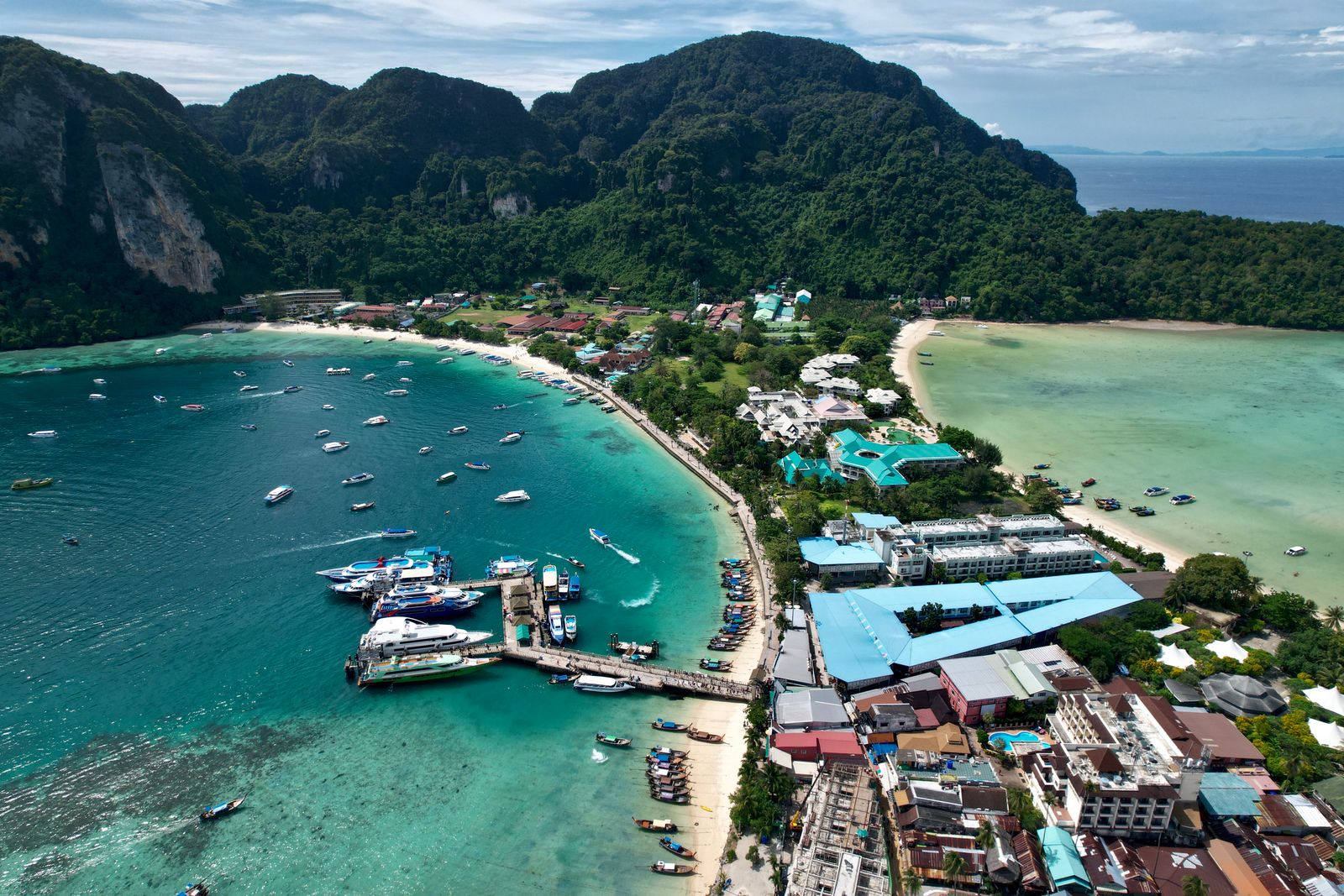
Phi Phi Don has a small government hospital in Tonsai Village, a few minutes’ walk from the main ferry pier. It is part of the Thai public health system and is the place for emergencies on the island: accidents, serious injuries, severe allergic reactions and anyone who is very unwell.
It is important to know its limits. The hospital’s main job is to stabilise patients and transfer them by sea to a hospital in Krabi on the mainland. It does not have the specialists, operating theatres or scanners of a city hospital. For anything that needs surgery, intensive care or specialist tests, expect to be sent to Krabi or Phuket.
If you are seriously ill or injured, don’t wait to see whether a clinic can help: call 1669 or go straight to the hospital.
Private clinics and medical centres
Most visitors with an everyday problem, such as an ear infection after snorkelling, an infected cut, a bad stomach bug or a sprained ankle, go to a private clinic. There are several in Tonsai Village. The World Med Center has a branch on Tonsai Bay and a smaller one near Loh Dalum Beach. Private clinics usually have English-speaking staff and can deal with your travel insurance, but they charge private rates, so ask about the cost before treatment and keep every receipt for your insurer.
Private clinics can also arrange transfers to private hospitals on the mainland if you need one, which your travel insurance may require.
Pharmacies on Koh Phi Phi
You will find pharmacies in the village lanes around Tonsai pier, most with English signs and staff used to helping travellers. They stock painkillers, rehydration salts, plasters, antiseptic, sunburn and bite creams, motion-sickness tablets and many other everyday medicines. Many medicines that need a prescription at home are sold over the counter in Thailand, so be careful: tell the pharmacist about any conditions, pregnancy or medication you already take, and see a doctor if you are not getting better.
For stomach upsets, the 7-Eleven and minimarts in the village also sell oral rehydration salt sachets, electrolyte drinks and coconut water. Our food poisoning guide has a full shopping list.
When you need a hospital in Krabi or Phuket
Serious cases are transferred from Phi Phi to the mainland by boat. The two nearest hubs are Krabi and Phuket, and the main hospitals that travellers are taken to are:
| Hospital | Where | Type |
|---|---|---|
| Krabi Hospital | Krabi town | Public (government) hospital |
| Krabi Nakharin International Hospital | Krabi town | Private hospital |
| Vachira Phuket Hospital | Phuket Town | Phuket’s largest public hospital |
| Bangkok Hospital Phuket | Phuket Town | Private hospital with an international patient centre |
Which one you go to depends on how urgent it is, what you need and your insurance. Public hospitals are much cheaper, but waits can be longer and fewer staff speak English. Private hospitals cost more but usually deal with insurers directly.
Travel insurance and medical transfers
A boat transfer and a few days in a private hospital can be very expensive, which is why travel insurance matters on an island. If you need more than a quick clinic visit:
- Call your insurer’s 24-hour emergency line as early as you can. Many insurers want to approve a transfer or hospital stay first.
- Keep your passport, insurance policy number and a payment card with you.
- Ask for an itemised receipt and a medical report for every visit.
- Diving, motorbike or adventure activities may not be covered unless you added them to your policy.

What a mobile IV nurse can and can’t help with
We are a mobile IV drip service, not a hospital, and we want you to get the right help. A licensed nurse can come to your hotel, bungalow or boat to treat:
- Dehydration from heat, sun, diving or a long travel day
- Vomiting and diarrhoea from food poisoning, when you can’t keep fluids down
- Hangovers with nausea, headache and exhaustion
- Tiredness and low energy after a few hard days
We can’t treat injuries, infections that need antibiotics, high fevers, breathing problems, allergic reactions, bites from animals or anything that needs a doctor’s diagnosis. If our nurse finds signs of something more serious during the health check, they will tell you and help you get to the hospital or a clinic. You can read about our nurses and protocols on our safety page, or see our food poisoning IV drip if you are stuck in your room with a stomach bug.
When you need a doctor, not a drip
Go to the hospital or call 1669 for chest pain, difficulty breathing, a severe allergic reaction (swelling of the face or throat), heavy bleeding, a head injury, confusion or fainting, a high fever with a rash, a dog or monkey bite, a suspected diving injury, or someone you can’t wake up. Don’t wait for a drip or a clinic appointment.

Common health problems on Phi Phi: where to go
| Problem | Where to go first |
|---|---|
| Cut on coral, sprain, ear infection | A private clinic |
| Sunburn, insect bites, a mild cold | A pharmacy |
| Vomiting, diarrhoea, can’t keep fluids down | Rehydration salts first; a mobile IV nurse or clinic if it isn’t working |
| Bad hangover | Water, food and rest; a mobile IV nurse if you are vomiting |
| Animal bite or scratch (dog, monkey) | The hospital or a clinic the same day: you may need rabies vaccination |
| High fever, especially with a rash or body aches | A doctor (clinic or hospital): don’t treat yourself |
| Serious accident, chest pain, breathing problems | Call 1669 or go to the hospital |

Medical help FAQ
Questions about healthcare on Koh Phi Phi
Is there a hospital on Koh Phi Phi?
Yes. There is a small government hospital in Tonsai Village, a short walk from the main pier. It treats emergencies and stabilises patients, and transfers serious cases by boat to a hospital on the mainland.
Is there a doctor on Koh Phi Phi?
Yes. Doctors work at the government hospital and at private clinics in Tonsai Village. Some private clinics also offer visits to hotels.
Is there a pharmacy on Koh Phi Phi?
Yes, several, mostly in the village lanes around Tonsai pier. The 7-Eleven and minimarts also sell rehydration salts and basic supplies.
How do I get to a hospital in Krabi or Phuket from Phi Phi?
In an emergency, the hospital or clinic arranges the transfer by boat. If it isn’t urgent, you can take a scheduled ferry and then a taxi to the hospital. Call your travel insurer first: they may need to approve it.
Can someone come to my hotel?
Some private clinics offer hotel visits. For dehydration, vomiting, food poisoning and hangovers, our licensed nurses come to your hotel, bungalow or boat with an IV drip, usually within 30–60 minutes in Tonsai and Loh Dalum.
Sources
Where this information comes from
- Phi Phi Islands, Wikipedia (healthcare on the island)
- Telephone numbers in Thailand, Wikipedia (emergency numbers)
- Vachira Phuket Hospital, Wikipedia
Last checked: October 2026. Clinics, opening hours and transfer arrangements change, so please confirm by phone. This guide is general information, not medical advice.
Keep reading
More from IV Drip Koh Phi Phi

Feeling rough? Help is one message away.
Daily 8:00 – 22:00